
Home Canning: Answers to Common Questions About Home Canning, Freezing and Making Jams, Salsa, Pickles and More!
Answers to Common Questions About Home Canning, Freezing and Making Jams!
- General Canning Process
- Why do I need a canner?
- Water bath canners
- Pressure Canning and canners
- Blanching
- Can I use a water-bath canner instead of a Pressure Canner for low acid foods like green beans?
- Vacuum food sealers
- Canning Jar questions and answers!
- Lids, Rings, Bands, Wires and Fittings for Canning Jars - questions and answers!
- Why jars don't seal and how to correct it.
- Things you can't can safely!
- Storage
- Spoilage, leaks and sealing,
- Additives and Ingredients
- Using honey in place of sugar
- Jams and Jellies
- Vegetables
- Tomatoes
- Squash and pumpkins
- Pickles
- Fruits
- Floating fruit after canning
- Nuts
- Meats
- Home Canning baby food
- Questions about freezing fruits and vegetables
- Color changes in home-canned foods
- Miscellaneous Questions
- Free Resources About Storing
Home canning is both an art and a science. Safety and quality are some of the reasons it is important to follow recommended recipes and procedures for home canning. That is the science. The art comes from the experience of what is "finger tight", when is the product packed too full or too loose or determining just the right ripeness.
Following modern recommendations (which have improved a LOT in the past 25 years) will result in a wholesome, safe product 98% of the time. Sometimes even when you follow recommended, lab-tested, up-to-date directions, something goes wrong. A jar doesn't seal, liquid is lost out of the jar, and the fruit is floating! So what went wrong?
Here are questions and answers to trouble-shoot common canning issues.
General - Canning Process
What about other canning methods (oven, microwave, steam, adding aspirin, etc.)
This answer is from the National Center for Home Preservation:
"Open-kettle canning and the processing of freshly filled jars in conventional ovens, microwave ovens, and dishwashers are not recommended, because these practices do not prevent all risks of spoilage. Can I blanch in my microwave oven?
Microwave blanching may not be effective, since research has shown that some enzymes may not be inactivated. Steam canners are not recommended because processing times for use with current models have not been adequately researched. Because steam canners do not heat foods in the same manner as boiling-water canners, their use with boiling-water process times may result in spoilage. It is not recommended that pressure processes in excess of 15 PSI be applied when using new pressure canning equipment. So-called canning powders (like salicylic acid, aspirin) are useless as preservatives and do not replace the need for proper heat processing. Jars with wire bails and glass caps make attractive antiques or storage containers for dry food ingredients but are not recommended for use in canning. One-piece zinc porcelain-lined caps are also no longer recommended. Both glass and zinc caps use flat rubber rings for sealing jars, but too often fail to seal properly.
If my recipe doesn't call for processing, do I need to do so?
Yes. Canning recipes prior to 1990 should not be used. Many old recipes do not include instructions for processing foods. The foods are canned by the open kettle method, sealed and stored. This method for canning, the open kettle method, is not recommended for it presents a serious food safety hazard. All high acid foods should be processed in a water bath canner,and all low acid foods in a pressure canner.
I was with my girlfriend canning today. It was my first time but she does it all the time. After reading your website it says to boil the jars after they are filled and sealed for sterilization. We did not do this. Is this something that has to be done every time? And if so what will happen if we don't?
Yes, that is a very important step. That's how the bacteria get destroyed. Otherwise, some botulism spores are still alive inside, thanks to airborne contamination. Over time, they will grow and spoil the food and/or result in food poisoning.
It won't necessarily happen every time; maybe the food is acid enough, or the level of airborne or surface contamination was low enough that it won't be noticeable, but it's like play Russian roulette.
If you promptly refrigerate the jars you just canned, and use them as if they need to be refrigerated, you should be fine! But next time, process them through a boiling water bath!
Is there anything I can't or shouldn't can at home?
Absolutely. Just because you can buy something in a jar that was canned, does NOT mean that it is safe for you to try that at home. Commercial canning equipment often hits higher temperatures, operate in sterile environment, include lab testing of representative homogenized batch samples for pathogens, and other safeguards that do not exist in a home kitchen or with home equipment. The National Home Canning center, a partnership between the USDA and U.Ga, provides list list of things you should not can at home (links provide additional information):
- Herbs or vegetables in oil or oil infusions. Instead, choose to make flavored vinegars (See below).
- Canned breads. Instead, package completely dry cake recipe ingredients as gifts and provide mixing and baking instructions.
- Canned chocolate sauces/ fudge sauces. Many of the recipes that are passed along are low acid, contain dairy products, and recommend boiling water processing. The NCHFP, USDA or its partners in the land-grant university-based Cooperative Extension System do not have safe tested recipes for these products.
- Pumpkin butter
- Canned gifts made in decorative, untested, jars. The temptation to package holiday canned foods in special decorative jars is not recommended. Only use recommended jars and lids.
- There are many other recipes that are not recommended. Choose only safe, tested recipes from research-based resources such as the NCHFP, USDA or the land-grant university-based Cooperative Extension System. The recipes that are published on pickyourown.org are duplicated from these sources - any significant deviations or untested recipes are rare and clearly identified as such.
Keep in mind that some recipes, such as those above, are safe if kept refrigerated or frozen, RATHER than canned and stored outside of a fridge or freezer. Most refrigerated foods can only safely be kept out of refrigeration for a very short period of time (usually less than 2 hours). Labels should tell the recipient to refrigerate. Likewise, frozen foods should not be allowed to thaw. These facts should be taken into consideration when choosing to give a refrigerated or frozen preserved food as a gift.
Is it possible for me to take an existing recipe from an ordinary cookbook or one my family handed down, fully prepared/cooked and simply CAN it? Such as White Turkey Chili, with the following ingredients: ground turkey, chicken broth, beans, veggies and spices--no thickeners. Or Tomato Basil: diced tomatoes, chicken broth, basil, & garlic. Some forums seem to be saying that you can only use recipes specifically geared towards canning. So does canning limit you to specific recipes?
The forums are right on this one. Safety considerations mean that unless you are willing to take a chance on exposing your family to potentially fatal doses of botulism, we use only the recipes which have been lab-tested by the USDA, FDA, and various university food science labs, where they can duplicate home conditions and culture the canned items to verify for pathogenic activity. All the recipes published on pickyourown, for canning, closely follow those tested by the USDA. Minor deviations from those are allowed, but you have to understand the ground rules of what's considered "allowable" (tytpically, salt, sugar, water and small amounts of seasonings).
Why is can't I just pack the hot food into jars, seal, and invert them? Why is this "open kettle canning" not recommended?
In open kettle canning, food is cooked in an ordinary kettle, then packed into hot jars and sealed without processing. The temperatures obtained in open kettle canning are not high enough to destroy all spoilage and food poisoning organisms that may be in the food. Also, microorganisms can enter the food when it is transferred from the kettle to jar and cause spoilage.
Can food be re-canned if the lid does not seal?
Canned food can safely be re-canned if the unsealed jar is discovered within 24 hours. To re-can, remove the lid and check the jar sealing surface for tiny nicks. Change the jar; if necessary, add a new treated lid and reprocess using the same processing time (heating the contents, refilling the jars, using new lids, and then the water bath or pressure canner again, for the full amount of time, etc.).
This is a more lengthy answer: click here for the full answer!
Canning for Camping, in plastic - I'm wondering if I can cook vegetables and vacuum pack them for backpacking trips ahead of time ... Will they last 10 days without refrigeration ?
It depends. I imagine that a food that can be safely home canned using the water bath method, could be packaged into the boilable vacuum sealer bags and then processed in the water bath for the specified duration and stored at room temperature afterwards.
How long the contents would remain suitably sterile is the real question. The problem is the porosity of the plastic bags. I assume they must 'breath' more than glass canning jars would. They certainly haven't been tested for this use; at least, not that I've seen. You would be on uncharted, and probably, unsafe, ground.
For other foods, like dairy, meats and low acid fruits and vegetables, I think this method would be clearly unsafe. The problem is that home canning equipment is not a true sterile environment, it just achieves a level of reduction of pathogens, not true elimination. The UHT packs that NASA uses and you can buy in camping stores are prepared at very high temperatures (138 to 150 C - equal to 280 to 302 F), that kill all but the hardiest thermoresistant spores. See this Guelph University page and this Wikipedia page for background information. ) So, at room temperature (or worse, a hot summer day in a back pack), the tiny number of bacteria that survive would reproduce geometrically, destroying the food, and producing toxic byproducts.
Drying on the other hand, IS an option. See this page for directions on how to dry a number of foods. https://www.pickyourown.org/allaboutcanning.htm#drying
If canned foods have been frozen during storage, are they safe to eat?
Freezing does not cause food spoilage unless the seal is damaged or the jar is broken. These often happen as the food expands during freezing. Frozen foods, however, may be less palatable than properly stored canned food. In an unheated storage place, protect canned foods by wrapping the jars in paper or covering them with a blanket.
If my recipe doesn't call for processing, do I need to do so?
Many recipes passed down through the years or found in older cookbooks do not include instructions for processing. The foods are usually canned by the open kettle method, sealed and stored. Foods prepared in this manner present a serious health risk, particularly low acid foods. To minimize the risk of food spoilage, all high acid foods should be processed in a water bath canner or pressure canner and all low acid foods in a Pressure Canner.
What do "hot pack" and "raw pack" mean? What is the difference between "Hot packing" and "Raw packing"
Raw-packing is the practice of filling jars tightly with freshly prepared, but unheated food. Hot-packing is the practice of heating freshly prepared food to boiling, simmering it 2 to 5 minutes, and promptly filling jars loosely with the boiled food. See this page for diagrams and much more information about it!
What is "headspace"?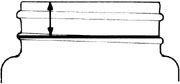
The unfilled space above the food in a jar and below its lid is referred to as headspace. See this page for a detailed answer!
Do I really need to leave a certain amount of headspace in the jar?
Yes, leaving the specified amount of headspace in a jar is important to assure a vacuum seal. If too little headspace is allowed the food may expand and bubble out when air is being forced out from under the lid during processing. The bubbling food may leave a deposit on the rim of the jar or the seal of the lid and prevent the jar from sealing properly. If too much headspace is allowed, the food at the top is likely to discolor. Also, the jar may not seal properly because there will not be enough processing time to drive all the air out of the jar.
Keeping the Lid on the canner - Regarding canning in hot water bath- I noticed on your photos that you do not cover the pot while processing. Is it necessary to cover the pot with a lid while processing or can you keep it open to make sure the water is covering the jars?
Well, actually, the lid is only off to show people what it looks like! Generally, yes, you should keep the lid on as much of the time as possible, to retain the heat.
Except when the processing times are very long (say, more than 25 minutes), I haven't needed to add more water during a batch, and even then you should only add water that is boiling already (I keep a separate saucepan with water on the stove, or else the temperature will drop!)
How long will canned food keep?
Properly canned food stored in a cool, dry place will retain optimum eating quality for at least 1 year. Canned food stored in a warm place near hot pipes, a range, a furnace, or in indirect sunlight may lose some of its eating quality in a few weeks or months, depending on the temperature. Dampness may corrode cans or metal lids and cause leakage so the food will spoil. Jams will keep for a year, but are at their best if used within 6 months.
Is it necessary to sanitize jars before canning?
Jars do not need to be sanitized before canning if they will be filled with food and processed in a water bath canner for 10 minutes or more or if they will be processed in a Pressure Canner. Jars that will be processed in a water bath canner for less than 10 minutes, once filled, need to be sanitized first by boiling them in hot water for 10 minutes before they're filled. This means you ought to sanitize jars when making jams and jellies, since they only need to be processed for 5 or 10 minutes, whereas for applesauce, apple butter, etc., you needn't sanitize the jars (since these have processing times of 15 minutes or more). But in any case, common sense says run them through the dishwasher right before canning, and that will sanitize them anyway, so it is rather a moot point.
Is it safe to process food in the oven?
No. This can be dangerous because the temperature will vary according to the accuracy of oven regulators and circulation of heat. Dry heat is very slow in penetrating into jars of food. Also, jars explode easily in the oven.
Can two layers of jars be processed in a canner at one time?
Yes, two layers can be processed at one time, in either the boiling water bath or pressure canner. Place a small wire rack between the layers so water or steam will circulate around each jar. Make certain that the water covers the tops of all jars by 1 inch in a water bath canner . The pressure canner should have 2 to 3 inches of water in the bottom.
Should liquid lost from the jar during processing be replaced?
No. Loss of liquid does not cause food to spoil, though the food above the liquid may darken. As long as the jars were processed in the canner for the specified amount of time and they sealed, they should be fine. If, however, the loss is excessive (for example, if at least half of the liquid is lost), refrigerate the jar(s) and use within 2 to 3 days.
Why did my jars lose so much liquid? The liquid level in some of the jars went down by half!
Water Bath Canners
Do I have to use a special canning pot for boiling water bath canning, or can I use any large pot that will allow my jars to be covered with water?Can a Pressure Canner be used on a flat-top stove? I know the large BWB (boiling water bath) canners have rippled or concave bottoms, so they don't contact enough of the surface to heat well. Are pressure canners flat-bottomed?Any very, very large pot will do, understanding that the larger the pot, the easier and safer it is, because more water means greater enthalpy, so the water cools down less when you add the jars. That means it takes less time in a larger pot for the water to come back to boiling and begin timing the processing.
Canners also come with racks to help life the jars in and out of the boiling water and prevent the jars from bumping each other and breaking.
It depends upon the stove manufacturer. Some can, most can't handle the size of the pots (either they don't get hot enough, or you risk cracking the stovetop under the trapped heat). See this page for more information:
Can I double stack jars in a water bath canner?
Yes, but I don't generally recommend it. Adding that many jars at once would likely cool the water so much that it would take a much longer time to get back up to boiling (and then start the timing). Which means the jars will be sitting in hot water a lot longer than if they were single stacked. You'd need a perforated plate or a small cookie / cake cooling rack to lay on top of the bottom layer so the top layer would be stable. And of course the jars would still need to be submerged by at least 1 to 2 inches of water.
Blanching
What is blanching?
Heating or scalding vegetables in boiling water or steam for a short period of time.
Is it recommended to blanch vegetable before freezing?
YES. Blanching slows or stops the action of enzymes which cause loss of flavor, color and texture. Blanching cleanses the surface of dirt and organisms, brightens the color and helps retard loss of vitamins. Blanching also wilts or softens vegetable and makes them easier to pack.
Why is it necessary to cool vegetables after blanching?
Vegetables should be cooled quickly and thoroughly after blanching to stop the cooking process. Otherwise, vegetables will be overcooked with loss of flavor, color, vitamins and minerals.
You mention to begin counting the blanching time as soon as you drop the vegetables to be blanched into the boiling water....instructions I have read on other sites say to begin counting the blanch time after the water returns to a boil. Which is right? I don't want my veggies undercooked as I need to destroy the enzymes and bacteria, but I don't want them overcooked either so they are like mush when I get them out of the freezer..
Well, the difference between the two methods is small; and the larger the pot of water is, the smaller the difference, so it shouldn't have much effect either way. I tend to go for slightly shorter times on veggies that ought to be crisp (like cucumbers or corn) because there is a greater likelihood that overcooking will turn them to mush more than enzymatic action. Many folks skip the blanching step entirely, if they have a deep freeze and will only be store up to 5 months.
How do I can oil with herbs? Can I can pesto?
Herbs and oils are both low-acid and together could support the growth of the disease-causing Clostridium botulinum bacteria. Oils may be flavored with herbs if they are made up for fresh use, stored in the refrigerator and used within 2 to 3 days. There are no canning recommendations. Fresh herbs must be washed well and dried completely before storing in the oil. The very best sanitation and personal hygiene practices must be used. Pesto is an uncooked seasoning mixture of herbs, usually including fresh basil, and some oil. It may be frozen for long term storage; there are no home canning recommendations.
Can I can cake or bread?
Cakes and breads are not recommended for canning. In fact, most of these products are not really "canned." These "canning" directions call for baking in the jar and then closing with a canning lid. This is not safe. Instead, choose recipes that you can freeze. Many recipes for quick breads and cakes are low-acid and have the potential for supporting the growth of a bacteria like Clostridium botulinum if it is present inside the closed jar. One university's research showed a high potential for problems. You will see these products were made commercially; however, additives, preservatives and processing controls not available for home recipes are used. Canning jar manufacturers also don't endorse baking in their canning jars.
Can I can butter?
No. You may find directions on the internet similar to this: Jars are preheated, the butter is melted down and poured into the jars, and the lids are put on the jars. Some directions say to put the jars in the refrigerator as they re-harden, but to keep shaking them at regular intervals to keep the separating butter better mixed as it hardens. This is merely storing butter in canning jars, not true'canning'. True home canning is when the food is heated enough to destroy or sufficiently acidified to prevent the growth of all spores of Clostridium botulinum (the bacteria that causes botulism) and other pathogens during room temperature storage on the shelf.
Additionally, when you consider the economics of the process (energy costs involved with heating, cost of jars and lids, etc.), even if the butter is bought on sale, it would rarely be economical to prepare butter to store for years in this manner. Good quality butter is readily available at all times, if butter is needed for fresh use. If the concern is about emergency food supplies, there are dry forms of butter that can be purchased and stored, oils that can be used in an emergency, or commercially canned butter in tins (although we have only seen this for sale from other countries). Melted and re-hardened butter may not function the same as original butter in many types of baking anyway.
See this page for a reference from a food science authority.
Pressure Canning
See this page:
Freezing - see this page for many questions about freezing fruits and vegetables
I don't have enough berries to make jam yet. Can I freeze them as they come in from my garden and then make jam from them when I have enough?
Definitely! I do it all the time. This works for berries (blueberries, raspberries, blackberries, strawberries, etc.) and many other fruit (like peaches, figs). And if they will only be in the freezer for a month or two before using them to make jam or other cooked products, there is no need to blanch them. It does help to prepare them a bit - like removing the hulls from strawberries, etc.
Vacuum food sealers
I do have a vacuum food sealer. Can it be used for "canning" and if so, how do I do it? Can I process it someway in the sealed bag? What recipes can I use and where will I find them?"
Nope, the food must be heated while not exposed to ambient air. The lid and ring system allows air to escape as the food expands, while remaining submerged under water. The vacuum bags would explode if they were heated after being sealed. And if you heat them unsealed, then sealed them, then they would be exposed to spores in the ambient air. Beyond the theoretical flaws, this approach has not been tested by a reputable food science lab. So, the short answer is, I'm certain it would be dangerous to try.
Things you can't can safely!
I am looking for directions for canning for making "Apple Pie in a Jar" that contains the piecrust!!!!! I have looked all over for a recipe and all I can find are ones that don't contain the piecrust. There is a place in Montana that makes this. They state that they use fully baked pies for this. I want to make this for my family but need to know process times, etc. What kind of dough recipe would I need to use - butter, shortening for crust, etc?
Ah, that would be because the food scientists are trying to keep you alive. Home canning of breads and dough's is considered to be very prone to toxic food poisoning. No one has yet been able to come up with a reliable recipe and canning direction that doesn't produce botulism some of the time. So, unless you like playing Russian roulette with your food and family, it's best avoided.
Here's what Clemson university researchers say:
Can I can bread or cake in a jar? These products are not recommended for canning. Choose recipes that you can freeze. In fact, most of these products are not really "canned." The directions call for baking in the jar and then closing with a canning lid. Many recipes for quick breads and cakes are low-acid and have the potential for supporting the growth of bacteria like Clostridium botulinum if it is present inside the closed jar. You will see these products made commercially; however, additives, preservatives and processing controls not available for home recipes are used. Canning jar manufacturers also don't endorse baking in their canning jars. There's also a detailed write up about the dangers of home bread canning from the National Home reservation Center at U.Ga. Also see this page at Penn State.
Is there a list, from a respected, reliable authority, of things I should not attempt to can at home?
The National Home Canning center, a partnership between the USDA and U.Ga, provides list list of things you should not can at home (links provide additional information from independent authorities):
- Herbs or vegetables in oil or oil infusions. Instead, choose to make flavored vinegars (See below).
- Canned breads. Instead, package completely dry cake recipe ingredients as gifts and provide mixing and baking instructions.
- Canned chocolate sauces/ fudge sauces. Many of the recipes that are passed along are low acid, contain dairy products, and recommend boiling water processing. The NCHFP, USDA or its partners in the land-grant university-based Cooperative Extension System do not have safe tested recipes for these products.
- Milk, dairy, butter and eggs.
- Pumpkin butter
- Canned gifts made in decorative, untested, jars. The temptation to package holiday canned foods in special decorative jars is not recommended. Only use recommended jars and lids.
- There are many other recipes that are not recommended. Choose only safe, tested recipes from research-based resources such as the NCHFP, USDA or the land-grant university-based Cooperative Extension System. The recipes that are published on pickyourown.org are duplicated from these sources - any significant deviations or untested recipes are rare and clearly identified as such.
Keep in mind that some recipes, such as those above, are safe if kept refrigerated or frozen, RATHER than canned and stored outside of a fridge or freezer.
Storage
How long can home-canned foods be safely stored and eaten?
There's no hard and fast rule. It varies on the specific fruit or vegetable product and storage conditions (cool - 40 F to 60 F and dark is best).
I've found that most canned vegetable and fruit retain good quality for 8 to 12 months. Applesauce and apple butter stay good for 2 or even 3 years. Jams and fruit tend to stay good for a bit less than a year, while pickles can be tasty for 2 years.
But that is subjective. Often, jars remain sealed and therefore safe to eat for 2 or 3 years. But usually, after a year, the quality declines, they get mushy and less tasty, so while they're still safe, you probably wouldn't want to eat them. I have heard of some cheapskates eating jars they had stored in the basement, and forgotten about, 10 years later. If they were processed correctly and remained sealed, they may have been safe... but that's just gross. The slow effect of enzymes would have turned the contents to mush.
Spoilage
Some of my jars failed to seal. What can I do to prevent jars not sealing?
To avoid having a jar fail to seal after processing:
- Use only standard canning jars. The glass in commercial jars (such as pickle or mayonnaise jars) doesn't have adequate lip thickness and thread depth needed for a good seal.
- Use a two-piece lid (flat and screwband). Do not use a one-piece lid as a substitute for a screwband. The ring may be re-used if it is not bent or rusty. Use a flat lid only once. Even mixing brands of flats and rings can cause sealing problems because of the design. Brand names are now stamped on the rings.
- Be sure the lip of jar is clean and not chipped.
- Follow headspace directions to avoid having liquid boil out of jars (siphoning) during processing. Headspace is the space between the inside of the lid and the top of the food. During siphoning, food particles in liquid may interfere with a seal. The ring (screw band) should be "finger tight" (tightened by hand) - not too tight or too loose. The band and lid are designed to let air vent from the jar during processing.
- Use jar lifter to remove each jar after processing so that the lid is not disturbed. Sealing takes place AFTER the jar is removed and starts to cool. Do NOT turn jars upside down.
- Be sure the correct processing time is used for the product being canned.
How can I tell if something I've canned has gone bad (spoiled, gone off)?
That is one of the challenges of any canned food, even store bought.
Generally speaking, spoilage is indicated by:
- the lid is bulged or flexes (isn't sucked down tight), then gas has built up from decay.
- Any signs of seepage or leaks (they should be fairly clean come out of the water bath).
- Finally, an off smell, visual signs of mold, or a change in color or texture from what it should be!
If I find mold growing inside a jar of canned food, can I just scrape it off and eat the food?
Mold growth in foods can raise the pH of the food. In home canned products, this could mean that the high acid products could become low acid and therefore run the risk of botulism or other bacterial spoilage. Thus, any home canned product that shows signs of mold growth should be discarded. The exception to this is jellied products. (where sugar is added). In these the high sugar content would prevent the growth of Clostridium botulinum. In jellied products, remove any surface mold plus 1/2 inch of the good product underneath and then use the rest immediately. Jellied products with extensive mold should be discarded.
I made peaches but immediately after I pulled them out of the water I knocked two jars over and they are now hissing at me I'm not too impressed either! Do these need to be eaten right away now? What happens when you bump them?
How to do test my jars for a good seal? How can I tell if they've sealed properly?Depends! You may just have disturbed them and leak a bit and then they resealed themselves. Or they're still leaking. So when they cool, check for a good seal and vacuum: is the lid still sucked down, and doesn't flex or pop when you press in the middle? Do any liquids leak out when you turn the jar upside down? If not, they're probably fine. But I'd mark them to be eaten first!
Test1: Press the middle of the lid with a finger or thumb. If the lid springs up when you release your finger, the lid is unsealed.
Test2: Hold the jar at eye level and look across the lid. The lid should be concave (curved down slightly in the center). That is due to the vacuum sucking the center of the lid down. If center of the lid is either flat or bulging, it may not be sealed.
Test 3: If liquids leak out when you turn the jars on their sides or upside down, it definitely is not sealed!
Some of my pressure-canned jars spoiled. What can I do to prevent spoilage when I use the pressure canner?
To avoid spoilage:
- Use the correct processing pressure and time adjusted for altitudes above 1,000 ft (if you are)
- Remove jars immediately from the pressure canner when processing time is up and pressure returns to zero. In other words, don't try to hasten the the process after the processing time is up but putting the canner under running water
Cloudy liquid SOMETIMES denotes spoilage but could be caused by starch from vegetables like peas, corn or lima beans, minerals in the water, or using table salt with fillers. Cloudiness is not necessarily harmful, but the product probably wouldn't win a prize at the county fair!
Some of my water-bath-canned jars spoiled. What can I do to prevent spoilage when I use the water bath canner?
To avoid spoilage:
- Use the correct processing time adjusted for altitudes above 1,000 ft (if you are)
- In the boiling water bath, water should boil continuously during the processing time with the water level covering the jars by at least one inch.
I have already water bath canned some tomatoes and was thinking about pressure canning them. Is it possible to pressure can them after the water bath canning without repacking new jars?
- No, because the lids would be used and are sold by the manufacturers as single use. Once the jars heated up and the contents expanded, the lids would unseal to allow escaping gases, and the question would be, will they reliably reseal and hold the seal in storag
Ingredients and Additives
Is it safe to can food without salt?Yes. Salt is used for flavor and is not necessary to prevent spoilage.
Is it safe to can fruits without sugar?
Yes. Sugar is added to improve flavor, help stabilize color, and retain the shape of the fruit. It is not added as a preservative.
Can fruits and vegetables be canned without heating if aspirin is used?
No. Aspirin should not be used in canning. It cannot be relied on to prevent spoilage or to give satisfactory products. Adequate heat treatment is the only safe procedure.
Is it safe to can green beans in a boiling water bath if vinegar is used?
No. Recommended processing methods must be used to assure safety. Recommended processing times cannot be shortened if vinegar is used in canning fresh vegetables (this does not refer to pickled vegetables).
Can I change the ingredients in the canning recipes?
You may like lots of peppers in your salsa or extra onion in your spaghetti. Is it safe to add extra or other ingredients to research tested recipes or to canning mixes that you buy?
No. Always follow directions on a mix exactly and follow tested recipes as written. Changing an ingredient may dilute or lower the acidity level changing the processing time or method. The exceptions to the rule of never change anything in canning recipes are you can change the salt level in anything except pickles, you can change the sugar level in syrup used for canned fruit, and you can add extra vinegar or lemon juice. Reference: Penn State University, "Let's Preserve Newsletter", September 2007
And from Mrs. Wages website:
The basic guidelines of safe home canning are to use only tested recipes, and follow the directions in those recipes exactly. Without the ability to determine the proper pH, density, or processing time when adjustments are made to a recipe the risk level rises sharply. Those points are especially important with salsa since it is eaten fresh from the jar with no added cooking to destroy toxins.
Vegetables
Should all vegetables be precooked before canning?
For best quality, yes. However, some vegetables can be packed raw or cold into jars before being processed in the pressure canner.
What vegetables expand instead of shrink during processing?
Corn, peas and lima beans are starchy and expand during processing. They should be packed loosely.
What causes corn to turn brown during processing?
This occurs most often when too high a temperature is used causing caramelization of the sugar in the corn. It may also be caused by some minerals in the water used in canning.
Why is canning summer squash or zucchini not recommended?
After I removed the jars from the canner, the jars had lost a lot of liquid and were about half-empty. What happened? Are they safe?Recommendations for canning summer squashes, including zucchini, that appeared in former editions of the USDA's "So Easy to Preserve" have been withdrawn due to uncertainty about the determination of processing times. Squashes are low-acid vegetables and require pressure canning for a known period of time that will destroy the bacteria that cause botulism. Documentation for the previous processing times cannot be found, and reports that are available do not support the old process. Slices or cubes of cooked summer squash will get quite soft and pack tightly into the jars. The amount of squash filled into a jar will affect the heating pattern in that jar. It is best to freeze or pickle summer squashes, but they may also be dried.
There are several possible causes:
- The food was not heated prior to filling (Raw pack method) -
- The food was packed too tightly (or loosely) in the jars
- All air bubbles were not removed prior to sealing the lids and rings on the jars
- The jars were not completely covered with water (applies to a water bath canner only)
- Starchy foods, such as corn, peas or lima beans, absorbed all the liquid. Use more liquid with these starchy vegetables.
- The jars were filled too full.
- Fluctuating pressure in the pressure canner. Let pressure return to zero gradually, avoiding the sudden release of pressure through the vent. Do not hasten the cooling with cold water.
As long as the jars remained sealed, they will be ok, but they should be checked more frequently and used up first!
I am trying to find a recipe for canning eggplant and having no luck.
I have not found a single reputable (USDA, FDA or university) source for a canning recipe for eggplant. According to Michigan State University Extension:
Canning eggplant alone is not recommended because it
does not make a quality canned or frozen food by itself.
Eggplant is better pickled or frozen in a casserole.
How about home canning of garlic?
Sorry! Home canning of garlic is definitely not recommended - it is a very low acid food so it is perfect for growing botulism. It also loses a lot of the flavor. It can be canned commercially because of the special high temp/high pressure equipment they have.
See this page at UC Davis for additional information.
Is there a way to can cabbage without making kraut or pickled cabbage?
Nope. As far as I know, there is NO reputable source (USDA, FDA, university food, Ball, etc.) of a safe recipe for home canning cabbage. Here's what the University of Missouri Food Sciences dept says:
"Canned cabbage is a very poor quality product. For this reason, we do not have any scientifically researched times for canning cabbage. There are several other alternatives: Cabbage, including Chinese cabbage, can be frozen, using directions in GH 1503, "Freezing Vegetables." Or, cabbage can be made into "freezer coleslaw." Directions are in issue 83-7 of the "Grapevine" newsletter. Barbara Willenberg, Nutritional Sciences, University of Missouri-Columbia. "
Is a way to freeze fresh potatoes?
I haven't tried it, but according to the USDA, there is:
Select smooth new potatoes directly from the garden.
Peel or scrape and wash.
Water blanch for 3 to 5 minutes, depending on the size.
Cool and drain.
Package whole or sectioned, leaving 1/2-inch headspace (unless you use pages, then remove all air)
Seal and freeze.
Do you know of a recipe for canned baby corn? I don't want pickled baby corn. I have not been able to find a recipe for one.
No, I have never seen a recipe for home canning baby corn from any reputable source (university food science dept, USDA, FDA, Ball, etc.) I'd be willing to bet that the non-uniform physical form, plus the lack of acidity would make it ideal for botulism. Commercial canning equipment reaches much higher temperatures for a brief period to kill spores that home equipment cannot.
There is an interesting description of the commercial baby corn canning process here
Tomatoes
See this page for answers to many common questions about tomatoes.
Squash and Pumpkins
How do I preserve pumpkin or winter squashes, like butternut squash? Do you recommend canning or freezing and what is the proper method?
I usually just store it in a cool dark place (basement). It will keep for many months (I've had some last 8 months). Just lay them out on newspapers with a couple of inches between each squash.
You can also cook it and freeze the pulp.
You can "can" it, but it has very low acid, so it requires a pressure canner, and you only cube the pulp, not mash it. It's a bit tricky. I'll put together a set of directions on it shortly!
What about canning summer squash or zucchini?
The USDA and the major universities with food science departments, like UGa, Clemson do not recommend canning summer squashes, including zucchini and yellow squash because squashes are low-acid vegetables and require pressure canning for a known period of time that will destroy the bacteria that cause botulism. Documentation for the previous processing times cannot be found, and reports that are available do not support the old process. Slices or cubes of cooked summer squash will get quite soft and pack tightly into the jars. The amount of squash filled into a jar will affect the heating pattern in that jar. The bottom line is there just are no tested recipes for it. If you do can using a hand-me-down recipe, you may have no problems... or you may get botulism, which can kill you. It is best to freeze or pickle summer squashes, but they may also be dried.
Fruits
Why do foods darken in the top of jars?
- Some air was left in the jar (bubbles not released adequately).
- Not enough liquid in jar.
- Loss of liquid from siphoning.
- Food not processed long enough to destroy enzymes.
Liquid did not cover the food or the food was not processed long enough to destroy enzymes. The food is safe to eat. However, you can scoop it off and discard the darkened top layer if you like.
What causes fruit, like peaches, to float in jar of canned fruit or jams?
There are a variety of reasons why fruit floats: Click here for the detailed answer - it's too big for this page!
When I put the jars into the water to be processed, air bubbles were coming out from the lids... is that normal?
Yes, that's due to the expansion of the contents of the jars are they heat in the water bath - the liquids expand and press out some air - that's what creates the vacuum when the jars cool and causes the lids to adhere tightly - so it's really a good thing!
Is a way to can strawberries whole instead of freezing them?
Yes, you can "can" (bottle or tin, if you prefer)! I tested a recipe and published the directions with photos on this page: how to can blueberries, raspberries, blackberries, currants, dewberries, elderberries, gooseberries, huckleberries, tayberries, loganberries and mulberries.!
Plums: Please let me know what you think of the "keep the skin on" and "keep the pits in when you boil" folks. I'm inclined to remove the skin (but not certain). But the pits...seems they impart some positive aspect to the flavor if left when boiling?
It's really just personal preference. The skins will add some color and help hold the fruit together. The pits don't add anything of value to the flavor (they're actually bitter if you were to crunch one and taste it), so if they're freestone and you can remove the pits , I would... but that's just my preference!
Can I home can fully cooked Apple Cobbler, Peach Cobbler, Blackberry Cobbler, other fruit cobblers, etc.?
I'm sure under some circumstances, it can be done, certainly with commercial equipment. The problem is that the recipes have not been tested for safety in university, USDA or FDA food science labs using home canning equipment. Because of the addition of low acid fillers (flours, starch, bread, etc.) we can't be sure that heat penetration will be uniform and botulism and other harmful bacteria will be destroyed.
A safer method would be to can the filling (apples or other fruit, sugar and spice) using the apple pie filling directions (with or without addition of the Clear-gel starch; you can always add the starch later) and simply add the flour, butter, starch and other ingredients and bake the cobble at the time you want to consume it!
Can I freeze oranges and other citrus?
The growers typically flash freeze and concentrate the juice, but not the fruit or pulp. Here's what one of the grower's says: "When whole fruit is frozen, the juice expands and bursts the cells inside. When the fruit thaws the pulp will be dry and the peel will be mushy. Whole citrus does not freeze with good results. However, you can squeeze, then freeze orange and grapefruit juice."
Jams and Jellies
Can I make a small amount of jam and just put it in a jar, let it cool and put it in the refrigerator and start eating out of it without canning it?
Absolutely! Canning is only needed if you intend to store it outside of the fridge!
Why can't I just fill the jars with hot jam, seal them and turn them upside down?
Word for word, from the USDA's labs:
"Some other methods of sealing jars call for inverting a closed, filled jar of hot product for anywhere from thirty seconds to one hour. (Inverting is turning the filled jar upside down on its lid.)
While this inversion process can be successful in producing a sealed jar, it works best with very hot product. Individual variation in practicing this process or unexpected interruptions can result in delays between filling jars, getting lids screwed on, and inverting the jars. If the product cools down too much, the temperature of the product can become low enough to no longer be effective in sealing jars or preventing spoilage.
When the inversion process does work, the vacuum seals of filled jars still tend to be weaker than those produced by a short boiling water canning process. A weak seal is more likely to fail during storage.
In addition, the headspace of the jar may retain enough oxygen to allow some mold growth if airborne molds contaminated the surface of the product as the jar was filled and closed. More complete removal of oxygen from the headspace also offers some longer protection from undesirable color and flavor changes with some types of fruit products. The canning process is therefore a more foolproof method of making jams and jellies that will not spoil.
Also, although no cases of burning have been reported in the news media, experience has shown that some people will experience leaking of the hot product from the jar when it is turned over if the lid wasn't put on just right. If hot enough, someone could get burned. Even if it doesn't cause burns, leaking means product is lost."
Elizabeth L. Andress, Ph.D., Professor and Extension Food Safety Specialist. The University of Georgia and Ft. Valley State University, the U.S. Department of Agriculture and counties of the state cooperating.
I see some mold growing on my jam. Can I just scoop it out and eat the rest of the jar?
For many years, many people, including me, just scraped off the mold and ate the rest. But just as you have heard about the cancer-causing effects of aflatoxin molds in peanut butter, a similar mold grows in jam. Here is the response, verbatim from the USDA and U.Ga.:
"The best answer is that there is a potential risk. However, we want to make a recommendation that minimizes all potential problems and hazards. Some molds growing on fruit products made at home have been shown to produce "mycotoxins", or mold poisons. The danger to humans from consuming mycotoxins, as well as the actual expected incidence of mycotoxins from moldy jars of jams, are issues with no easy answers.
But, animal studies indicate there is the potential for poisonous effects of some mycotoxins in humans. Patulin is one mycotoxin detected in a few tested jars of homemade apple jam and juice. Patulin has been shown to be carcinogenic in animals, but its role in causing human disease is not all that clear. It is also difficult to assess the actual health risk from consuming moldy jam or jelly because not all molds produce mycotoxins, and molds which do produce them vary in consistency of production when conditions change some. Elizabeth L. Andress, Ph.D., Professor and Extension Food Safety Specialist. The University of Georgia and Ft. Valley State University, the U.S. Department of Agriculture and counties of the state cooperating. "
Should jelly be boiled slowly or rapidly?
Jelly should be boiled rapidly since long, slow boiling destroys the pectin in the fruit juice.
Can I make a double batch of jelly?
NO. If a larger quantity of juice is used, it will be necessary to boil it longer thus causing loss of flavor, darkening of jelly, and toughening of jelly.
Why is my jam too runny?
The following can cause soft jam: overcooking, processing too long, too little pectin, incorrect proportions of sugar and juice, undercooking, insufficient acid, or making too large a batch at one time.
Could you tell me why my JAM is thicker then the store bought?
The natural pectin content of fresh fruit varies, so it is possible the the variety of fruit that you used has more natural pectin, making it thicker. But there's an easy answer - just add less pectin next time. You will have to experiment to find how much pectin makes the consistency you like. Most people seem to like their jam thick, so you may to need to only use 3/4 of a pack of pectin per batch.
I made some raspberry jam about 3 weeks ago and I noticed about 6 of my jars did not set properly. They are very runny! With this amount of time that has gone by can I re-do the jars again?
Yes, you can remake the jam later. 3 weeks isn't so long, so the quality shouldn't be diminished by much. - just see this page for directions: https://www.pickyourown.org/how_to_fix_runny_jam.htm
Why is my jelly soft?
The following can cause soft jelly: overcooking the fruit to extract the juice, using too much water to extract the juice, incorrect proportions of sugar and juice, undercooking causing insufficient concentration, insufficient acid, or making too large a batch at one time.
Can I use frozen fruit to make jams?
Absolutely! I usually freeze a dozen quarts of strawberries after I go picking! I wash them, hull them and slice them in half, then freeze them in heavy-duty Ziploc freezer bags (squeezing as much of the air out as I can, or using a vacuum FoodSaver and the vacuum bags. That way I can use those strawberries together with fruits that I pick later in the season, like blackberries, raspberries and blueberries to make mixed berry jams. You can use the frozen (without added sugar) fruit just the same as fresh. Just defrost them right before you use them.
I have a question about canning and Making Jellies. I am making Pear and grape jelly from the fruit we grow and I use a pressure cooker! Could this be why my jellies are not setting up? I make my jelly and Put the cans into the cooker until it hits 220 Degrees and take it off the stove. Could I be over heating the pectin so my jellies will not set correctly?
Probably, they're being exposed to too much heat for too long; I'd expect the pectin is breaking down. Just leave the valves open and use the pressure canner as a water bath canner!
Can anyone tell me why my jelly sometimes has bubbles in it after it has cooled down?
Bubbles are trapped air or water vapor. When the jam is boiling, the bubbles rising from the bottom of the pan and air mixing at the surface become mixed in the jam. If the viscosity of the jam is high enough, the bubbles cannot break free. The foam produced is the portion that has the highest viscosity - this is when we suggest to skim off the foam. Many people add 1 teaspoon of butter or margarine to the jam before they start to cook it. This helps prevent the bubbles from forming. Exactly why, I can't tell you (it's been too many years since my fluid mechanics class in chemical engineering) - it probably has to do with disruption the surface tension or hydrophilic bonding; but the point is, it seems to work. Another method is to allow the jam to sit undisturbed for about 5 minutes after you remove it from the heat, then skim off the foam and jar the remaining jam and process it in your boiling water bath.
I just picked a boatload of wild raspberries, which are now in my freezer. Do I need to remove the seeds? If so, how do i go about doing that? The seeds are so small!
Yep, the seed-to-fruit- ratio is especially high in the wild berries. I just made a batch of seedless raspberry jam yesterday. The easiest way to de-seed them is to use a food mill with a fine screen (they pass through the standard manual Foley food mill). The Villaware and Roma brands have a fine screen that works, see this page: https://www.pickyourown.org/canningstrainers.htm They're more expensive than a Foley food mill, but they come with screens of different sizes, you can add a motor later to them, and they will work to make applesauce, fruit butters, spaghetti sauce and seedless jams / jellies.
Other Problems and troubleshooting jellied products
- What do I do if there's mold on my jellied fruit product? NCHFP
- Why did my jellied fruit product ferment, and what do I do? NCHFP
- What happens if my jam or jelly doesn't gel? Remaking cooked runny jam or jelly instructions can be found on this page
- Ingredient Problems in Jelly and Jam N. Dakota State Univ.
- Common Problems in Jam and Jelly Making N. Dakota State Univ.
Soups and Chili
I've what may be a dumb question, but since my wife's kids have left home and our recipes are for a much larger family it has occurred to me that I could immediately can the leftovers after a meal. I'm talking soups and my chili here. Do I have to pressure can them since they're already fully cooked, or can water bath them?
Well, it's not that simple. There are many other factors that affect the viability of botulism and other dangerous bacteria. The spores are very heat resistant and are airborne. This means two things:
1. Not all foods can be safely canned at home, regardless of the method, equipment or recipes used and
2. Of those foods that may be safely canned at home, you should stick to tested, approved recipes. Many of the recipes floating around the internet have not been tested by any university's food lab and may not (more often are not) safe.
All of the canning recipes I post are closely based on the USDA and lab-tested recipes. Generally speaking, I don't think I'd take a risk canning leftovers, unless I was doing so as part of following an approved canning recipe. And for better flavor, you'd generally do better freezing than canning leftovers anyway.
However, having said all this, there are some very good and general tested recipes for canning soups and chili. I think it will offer you enough flexibility to meet your needs! See this page: https://www.pickyourown.org/how_to_can_soups.htm. And yes, it does require a Pressure Canner (remember the airborne spores can re-contaminate right up to the second you close the lid (and trap non-sterile air with spores inside)
Nuts
Canning peanuts: I have a question for you! I'm interested in jarring my own peanut butter. Have you ever done so? I have a good recipe and mason jars (still need to get lids and equipment to help seal the jars. What would you recommend?
No can do. Peanuts, pecans, walnuts, cashews, hazelnuts and other nuts are non-acidic, and make an absolutely perfect medium, in a sealed container for botulism. Only commercial canning equipment can reach the temperatures and pressures required to kill it and other pathogens to levels considered safe.
But you can safely freeze nuts and peanut butter!
Meats
I'm looking for a recipe to pickle sausages, like those pickled sausages you can buy at convenience stores, the ones wrapped in plastic with a little bit of brine . Do you have a recipe?
That's one recipe I have not seen. But, the Ball Blue Book has a recipe for home canning pork sausage on page 58. I cannot imagine how adding vinegar and a little spice to the canning broth would cause any harm (the increased acidity ought to actually help improve safety), so if I liked pickled sausage, I'd be tempted to try that!
Should giblets of chicken be canned in the same jar with chicken?
No. Their flavor may permeate other pieces of chicken in the jar.
Is it safe to can meat and poultry without salt?
Yes. Salt is used for flavor only and is not necessary for safe processing.
Why is it necessary to remove as much fat from meats as possible before canning?
Any fat that gets on the rim of the canning jar can prevent an airtight seal. Excess fat in jars makes it easier for the fat to climb the sides of the jar and contaminate the seal.
Can I get directions for canning my Brunswick stew at home?
Recommendations for canning Brunswick stews at home have not been scientifically determined. These are low-acid mixtures which could support the growth of bacteria that cause botulism, so a process cannot be estimated or made up. It must be a tested process known to kill these bacteria in this product. In addition, the recipes for Brunswick stew vary and a process would have to be developed through scientific testing for each variation. No directions for this product are available at this time. It is best to freeze Brunswick stews.
Home canning baby food
I was considering canning food for my baby. I read your site and I saw that you canned for your child. Is it ok to puree the vegetables and fruit first before you can it? What size of jar did you use for the baby food?
Yes, in almost all cases it makes no different if you puree. The only exception I know of is pumpkins and squash, which have only been tested by the USDA as cubed, not pureed in a home situation. If there are any other exceptions, I'll not them in the specific directions or recipe.
You can use any size jar, as long as it is a ring and flat lid type (the Ball/Kerr/Mason type). The jars go as small as 4 oz, but then the price per ounce of canned food becomes higher, so I usually use pints or half-pint (8 oz) jars. Something that I know will be eaten quickly, and can stored in the fridge for a few weeks, like applesauce, I'll do in quart jars.
What foods make the best candidates for home preserving as baby food or for children?
I've found applesauce is one of the best candidates because it is easy, needs no additives of any kind, is very economical, stores up to 2 years and children love it. Homemade tomato products, like spaghetti sauce, are similarly good.
Fruits and jam, of course are also popular for children. You can add a spoonful of jam to plain yoghurt as a healthy food for small children, too.
Frozen corn and peas from the garden are very popular with my kids, as they are much sweeter than store bought.
Canned figs and peaches are popular and easy for older infants just starting on solids; pureed for younger.
Miscellaneous Questions
If canned foods have been frozen during storage, are they safe to eat?
The answer is, yes, they are safe, as long at the seal remained intact. The quality may suffer; freezing usually ruptures cell walls of plant matter, so canned beans would probably be more mushy, whereas applesauce would be relatively unaffected. However, the key is to ensure that the seal on the jar hadn't been broken. When water freezes, it expands, so if the jar froze completely, it is very likely to have pushed the lid out. Obviously, with Ball/Kerr lids, it is easy enough to test the seal by seeing if the lid flexes (clicks in and out) when the jar is completely thawed again.
Why do canned pears and some other fruit I can, sometimes turn pink?
Oxidation may cause foods to darken at the tops of jars. Oxidation is from air in the jars or too little heating or processing to destroy enzymes. Overprocessing may cause discolored foods throughout the containers. Pink and blue colors sometimes seen in canned pears, apples, and peaches are caused by chemical changes in the coloring matter of the fruit. Iron and copper from cooking utensils (or from water in some localities) may cause brown, black, and gray colors in some foods. When canned corn turns brown, the discoloring may be due to the variety of the corn, to stage of ripeness, to overprocessing, or to copper or iron pans. Packing liquid may dissolve coloring materials from the foods.
Darkening of foods at the tops of jars may be caused by oxidation due to air in the jars or by too little heating or processing to destroy enzymes. Overprocessing may cause discoloration of foods throughout the containers. Pink and blue colors sometimes seen in canned pears, apples, and peaches are caused by chemical changes in the coloring matter of the fruit. Iron and copper from cooking utensils or from water in some localities may cause brown, black, and gray colors in some foods. When canned corn turns brown, the discoloring may be due to the variety of corn, to stage of ripeness, to overprocessing, or to copper or iron pans. Packing liquid may dissolve coloring materials from the foods. The use of plain tin cans will cause some foods to lose color.
Source: U.S.D.A. 1976. Home Canning of Fruits and Vegetables. Home and Garden Bulletin No. 8. (Issued February 1965, Slightly revised May 1976). United States Department of Agriculture, Washington, D.C.
Is it safe to eat discolored canned foods?
The color changes noted above do not mean the food is unsafe to eat. However, spoilage may also cause color changes. Any canned food that has an unusual color should be examined carefully before use.
U.S.D.A. 1976. Home Canning of Fruits and Vegetables. Home and Garden Bulletin No. 8. (Issued February 1965, Slightly revised May 1976). United States Department of Agriculture, Washington, D.C.
I want to bottle / can some tap water. Our town gives us good, safe water. But I'd like to can some ( which will be used within a year). How long can I keep it stored and how do I can it?"
Now that's an interesting question. I suppose you could filter your own tap water at home using a simple activated carbon filter to get rid of any bad tastes or odors, and other chemicals that may be in the water, then boil it, and filling sanitized canning jars, seal and process in a water bath for 15 minutes. That ought to do it, since there is nothing in the water for the few remaining bacteria to grow upon.
That's just my guesstimate, I've never seen anything published on the subject, so the process is just a guess.
How long would it store? A year? Unless you have a lab to do bacterial cultures and test, that's also a guess, but given the foods that we can are water plus nutrients, I feel comfortable saying this would work...
Canning Baby Food at Home
Can you give me tips on canning baby food?
I have a 2 year old myself, so I just went through canning baby food last year. Basically, it's the same as regular canning, etc. you will need to chop or puree - which you can do when you use it, or in some cases, beforehand. Applesauce, for example, is a perfect ready-made baby food. If you want to can low acid foods (like most vegetables, aside from tomatoes and pickles), you will need a Pressure Canner.
A big advantage of home-canned and home-frozen baby foods is the absence of food additives, preservatives, pesticides and other chemicals.
Since fresh foods and unprocessed foods are almost always better (more nutritious) than anything process or even cooked, I use the following hierarchy:
1. grow my own fresh fruits and vegetables
2. pick my own fresh fruits and vegetables from local farms
3. store fruits and vegetables in a cool dark place like the basement or garage
4. freeze fruits and vegetables
5. can fruits and vegetables
6. store-bought fresh
7. store-bought frozen
8. store-bought canned or otherwise processedYou will find that a number of vegetables you can grow can just be stored in a basement - like sweet potatoes, onions, potatoes, winter squash (butternut, Hubbard, acorn, etc.) They will keep for months - up to a full year under the right conditions. That's better than freezing or canning.
Some vegetables, especially low acid vegetables (which is most acid from tomatoes and anything pickled) require a pressure canner (see this page for models) to ensure they are safe.
AAside from those tips, any of the canning recipes on the website will for just the same! My baby's favorites were the applesauce, apple butter, a touch of homemade jam in yogurt, spaghetti sauce, canned or frozen beets, corn, peas and carrots.
Can I can bread or cake in a jar?
I would like to learn how to make vinegar from fruit but cannot find any information. Can you help or point me in the right direction?These products are not recommended for canning; choose recipes that you can freeze. In fact, most of these products are not really "canned." The directions call for baking in the jar and then closing with a canning lid. Many recipes for quick breads and cakes are low-acid and have the potential for supporting the growth of a bacteria like Clostridium botulinum if it is present inside the closed jar. One university's research showed a high potential for problems. You will see these products made commercially; however, additives, preservatives and processing controls not available for home recipes are used. Canning jar manufacturers also don't endorse baking in their canning jars.
I haven't tried it myself, but Mississippi State has a detailed set of instructions here
You can attempt to turn red wine into vinegar by just letting it sit on your counter without a "mother" (starter culture), but you're likely to have tastier results with the help of some starter bacteria. You save some from each batch to start the next batch. People who regularly make their own vinegar can use new generations of one mother to make vinegar for decades. Mothers can even be passed on to friends as a floating blob suspended in a little liquid - usually wine diluted with water. Beer and wine making stores also sell vinegar mothers for around $10
This store sells a Cider vinegar culture. And a scientific supply store, Carolina Supply, sells the another version of the bacteria here.
Ohio State has general directions (Click here for the vinegar pdf ) but they leave out a lot of useful and necessary information, like the canning steps.
Can I can my own mayonnaise?
It's possible, but I sure wouldn't recommend it. I haven't found ONE, not ONE set of directions discussing how to home can mayonnaise, not from any reputable website (like the USDA or a university food science department), nor any canning book.Given the ingredient's propensity to easily spoil and how eggs are usually contaminated with salmonella anyway, and the low acid content... I'd say it's a recipe for severe food poisoning. Stick to making it, then refrigerating it.
Who Invented the Canning Jar? Does Ball still make jars? - See:
A Brief History of the Home Canning Jar: From Mason to Kerr to Ball and More
Free Resources About Storing
- Storing Home Canned Foods
- Packaging and Storing Dry Foods
- Food Storage for Safety and Quality (Colorado State University) pdf
- Cupboard Approximate Storage Times (Kansas State University) pdf
- Refrigerator/Freezer Approximate Storage Times (Kansas State University) pdf
- Proper Care and Handling of Fruits and Vegetables From Purchase to Preparation (Penn State University) pdf
- Storing Vegetables at Home (University of Wisconsin) pdf
- Safe Home Food Storage (Texas A&M University) pdf
| See here for related tools, equipment, supplies on Amazon |
Norpro 1951 Manual Food Strainer, with optional motor; (almost identical to Victorio V250, Villaware and Roma models, all discontinued)
See the seller's website for more information, features, pricing and user reviews! |
| Find this item (B09WDKLMPW) on Amazon See here for related tools, equipment, supplies on Amazon |
Deluxe Food Strainer and Sauce Maker
|
Canning Books, Supplies and Accessories
These are my favorite essential canning tools, books and supplies. I've been using many of these for over 50 years of canning! The ones below on this page are just the sampling of. my preferred tools. but you can find much more detailed and extensive selections on the pages that are linked below.
- Vacuum Foodsealers for freezing, dried foods, and refrigerated foods - the FoodSaver line
- Selecting a KitchenAid mixer and attachments for home canning
- Steam Juicers
- Strainers, pit removers, seed-skin-stem removers, jelly strainers, etc. All types, makes and prices (from $19 to $350)
- Cherry pitters reviews, prices and ordering
- Food dehydrators - easy and fast to dry your own fruits, veggies, sun-dried tomatoes, etc.
The All New Ball Book Of Canning And Preserving: Over 350 of the Best Canned, Jammed, Pickled, and Preserved Recipes Paperback
This is THE book on canning! My grandmother used this book when I was a child.; It tells you in simple instructions how to can almost anything; complete with recipes for jam, jellies, pickles, sauces, canning vegetables, meats, etc.
If it can be canned, this book likely tells you how! Click on the link below for more information and / or to buy (no obligation to buy)The New Ball Blue Book of Canning and Preserving
Canning and Preserving for Dummies by Karen Ward
This is another popular canning book. Click here for more information, reviews, prices for Canning and Preserving For Dummies
Of course, you do not need to buy ANY canning book as I have about 500 canning, freezing, dehydrating and more recipes all online for free, just see Easy Home Canning Directions.
Home Canning Kits
See here for related tools, equipment, supplies on Amazon See here for related tools, equipment, supplies on Amazon
I have several canners, and my favorite is the stainless steel one at right. It is easy to clean and seems like it will last forever. Mine is 10 years old and looks like new.
The black ones are the same type of standard canner that my grandmother used to make everything from applesauce to jams and jellies to tomato and spaghetti sauce.
This complete kit includes everything you need and lasts for years: the canner, jar rack, Jar grabber tongs, lid lifting wand, a plastic funnel, labels, bubble freer, It's much cheaper than buying the items separately. It's only missing the bible of canning, the Ball Blue Book.
You will never need anything else except jars & lids (and the jars are reusable)!
The complete list of canners is on these pages:
- Water bath canners - Good for acidic foods, like applesauce, pickles, salsa, jams, jellies, most fruits
- Pressure canners - needed for low and non-acidic foods, like canned vegetables (corn, green beans, etc), and meats
- Canners for glass top stoves if you have a glass or ceramic stove
- Canners for induction stovetops
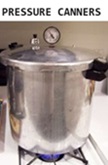
Pressure Canners
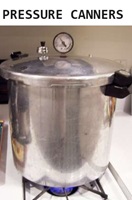
If you plan on canning non-acidic foods and low acid foods that are not pickled - this means: meats, seafood, soups, green beans corn, most vegetables, etc., then you ABSOLUTELY must use a Pressure Canner.
Of course, you can use a pressure canner as a water bath canner as well - just don't seal it up, so it does not pressurize. This means a Pressure Canner is a 2-in-1 device. With it, you can can almost ANYTHING.
There are also other supplies, accessories, tools and more canners, of different styles, makes and prices, click here!
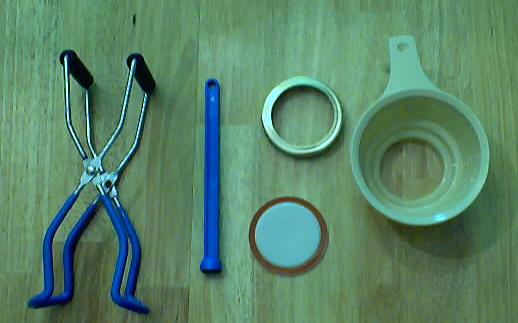
Basic Canning Accessories
From left to right:
- Jar lifting tongs to pick up hot jars
- Lid sanitizer / lifter - to remove lids from the pot of boiling water (sterilizing )
- Lids- disposable - you may only use them once
- Ring - holds the lids on the jar until after the jars cool - then you remove them, save them and reuse them
- Canning Jar funnel - to fill the jars
FREE Illustrated Canning, Freezing, Jam Instructions and Recipes
Don't spend money on books. that you don't need to. Almost everything you can find in some book sold online or in a store is on my website here for free. Start with theEasy Home Canning Directions below. That is a master list of canning directions which are all based upon the Ball Bblue book, the National Center for Home Food Preservation and other reputable lab tested recipes. Almost every recipe I present in addition to being lab tested com. is in a step by step format with photos for each step and complete. explanations. that tell you how to do it, where to get the supplies and pretty much everything you need to know. In addition, there almost always in a PDF format so you can print them out and use them while you cook.
[ Easy Home Canning Directions]
[FAQs - Answers to common questions and problems]
[Recommended books about home canning, jam making, drying and preserving!]
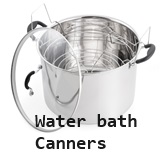

Looking for canning equipment and supplies?
Water bath canner with a jar rack
Pressure canners for gas, electric and induction stoves: Presto 23Qt or T-fal 22Qt
Canning scoop (this one is PERFECT)
Ball Blue book (most recent version)
Jars: 8oz canning jars for jams
Find Other types of farms:
Farm markets and roadside stands
Road trips and camping resources
Local Honey, apiaries, beekeepers
Consumer fraud and scams information
Home canning supplies at the best prices on the internet!
Maple Syrup Farms, sugarworks, maple syrup festivals
Environmental information and resources
Farms For Your Event for birthday parties, weddings, receptions, business meetings, retreats, etc.
Festivals - local fruit and vegetable festivals
Get the
most recent version of
the Ball Blue Book
