Looking for Do I Need to Use a Canner and How to Choose a Canner in 2024? Scroll down this page and follow the links. And if you bring home some fruit or vegetables and want to can, freeze, make jam, salsa or pickles, see this page for simple, reliable, illustrated canning, freezing or preserving directions. There are plenty of other related resources, click on the resources dropdown above. If you are having a hard time finding canning lids, I've used these, and they're a great price & ship in 2 days.
If you have questions or feedback, please let me know! There are affiliate links on this page. Read our disclosure policy to learn more.
Do I Need to Use a Canner and How to Choose a Canner
Why do I need to Use a Canner?
and
How to Choose a Canner
If you are considering canning foods at home, home food preservation, making jams, jellies, salsa, sauces, fruit butters, pickles, etc., you may be using a hand-me-down recipe and a method that is prone to spoilage and food poisoning.
Using lab tested recipes (like ours) is part of the solution, but so is using the proper method and canning equipment.
See this page for an explanation ofwhy you should use a canner.
and
This page for how to choose the proper type and brand of canner
References
- Iowa State University - Answer Line
- University of Tennessee Agricultural Extension Service - Methods of Canning (PDF)
- The "Complete Guide to Home Canning," Agriculture Information Bulletin No. 539, USDA (Revised 1994).
Free Resources About Storing
- Storing Home Canned Foods
- Packaging and Storing Dry Foods
- Food Storage for Safety and Quality (Colorado State University) pdf
- Cupboard Approximate Storage Times (Kansas State University) pdf
- Refrigerator/Freezer Approximate Storage Times (Kansas State University) pdf
- Proper Care and Handling of Fruits and Vegetables From Purchase to Preparation (Penn State University) pdf
- Storing Vegetables at Home (University of Wisconsin) pdf
- Safe Home Food Storage (Texas A&M University) pdf

Looking for canning equipment and supplies?
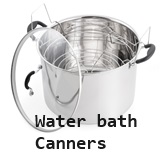
Water bath canner with a jar rack
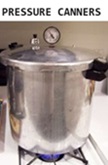
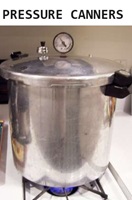
Pressure canners for gas, electric and induction stoves: Presto 23Qt or T-fal 22Qt
Canning scoop (this one is PERFECT)
Ball Blue book (most recent version)
Find Other types of farms:
- Easter egg hunts
- Children's consignment sales
- Farm markets and roadside stands
- Road trips and camping resources
- Local Honey, apiaries, beekeepers
- Local Meat, Milk and Eggs
- Consumer fraud and scams information
- Home canning supplies at the best prices on the internet!
- Maple Syrup Farms, sugarworks, maple syrup festivals
- Environmental information and resources
- Farms For Your Event for birthday parties, weddings, receptions, business meetings, retreats, etc.
- Festivals - local fruit and vegetable festivals
- Pumpkin patches and corn mazes
- Christmas Tree Farms and lots
Get the
most recent version of
the Ball Blue Book
Get the
most recent version of
the Ball Blue Book of Home Canning
Find other types of farms:
- Easter egg hunts
- Children's consignment sales
- Farm markets and roadside stands
- Local Honey
- Local Meat, Milk and Eggs
- Road trip and camping
- Pumpkin patches and corn mazes
- Christmas Tree Farms and lots
- Maple Syrup farms and sugarworks
Highly rated canning supplies:
- Regular Mouth Canning Lids with food-grade with BPA Free Silicone seals for Ball, Kerr Jars for Canning
- Canning accessories kit: funnel, jar tongs, lid lifter, etc
- Food Dehydrator, 400W Electric with 8 Trays, 48 hour Timer and Temperature Control 95-176℉, BPA-Free
- Water Bath Canner, 21 Qts with lid, Jar Rack, Speckled Black, cans 7 quart jars, 9 pint jars or 13 half-pint jars
- Air Fryer: Instant Pot Instant Vortex Plus XL 8QT Clear Windows, Custom Programming, 8-in-1 Functions that Crisps, Broils, Roasts, Dehydrates, Bakes, Reheats
- Pressure canner: All American 921, 21.5qt Pressure Cooker/Canner, never needs gaskets, Great for Gas, Electric or Flat Top Stoves - Made in the USA
- The Backyard Homestead:a guide to homesteading , on 1/4 acre, how to raise grains and vegetables; raise animals for meat, eggs, and dairy; and keep honey bees
- Smart silent HEPA Air Purifiers for Home, Large Rooms for Allergies, Smoke, Pets. Eliminates 99.97% of Dust, Pet Hair, Odors